SIG Smart Meter Project

Optimized Construction Site Logistics

What if technicians no longer had to carry their equipment?

This project illustrates a new approach to urban logistics in which people and goods follow different routes, each optimized for its specific purpose. By coordinating construction site supply chains through multimodal logistics, urban nano-hubs, and cargo bike deliveries, OVO transforms logistics into an invisible infrastructure that supports on-site operations. This innovation foreshadows future supply models for technical networks, maintenance, and urban services.

Project Summary

SIG, like all Swiss distribution system operators, must replace its electricity meters with next-generation meters by the end of 2027. These meters enable better control over electricity consumption by providing real-time data to consumers. OVO won the public tender for the project’s logistics management.
Rather than having electricians transport their equipment every day, this project relies on fully outsourcing logistics. Technicians can thus travel by bike or public transportation, while OVO handles all supply operations directly at the job sites. This approach reduces unnecessary travel, optimizes the technical teams’ working time, and significantly lowers the operation’s environmental footprint. By managing inventory, order fulfillment, deliveries, and the collection of old meters, OVO ensures that every electrician has the right equipment in the right place at the right time. Transportation is carried out entirely using electric vehicles, and within the city center via cargo bikes.
The Project in Numbers

In this strategic project, OVO serves as the primary logistics coordinator, ensuring the daily supply of goods to dozens of sites.

➕ 200,000 units to be distributed and collected

➕ 100 people involved in 5 different companies

➕ 75% of the materials collected from old meters are recycled

How does it work?

Two delivery options for sustainable transportation projects. In both cases, electricians travel on foot, by bike, or via public transportation. OVO handles the transportation of equipment and return shipments.

Delivery to the doorstep

    1. The electrician orders the necessary equipment on the platform and selects the date for the job.
    2. OVO delivers the order the next business day directly to the construction site address.
    3. The electrician receives the tracking information and delivery confirmation.
    4. After the procedure, he indicates which equipment needs to be retrieved.
    5. OVO picks up returns and equipment for recycling as early as the next day.

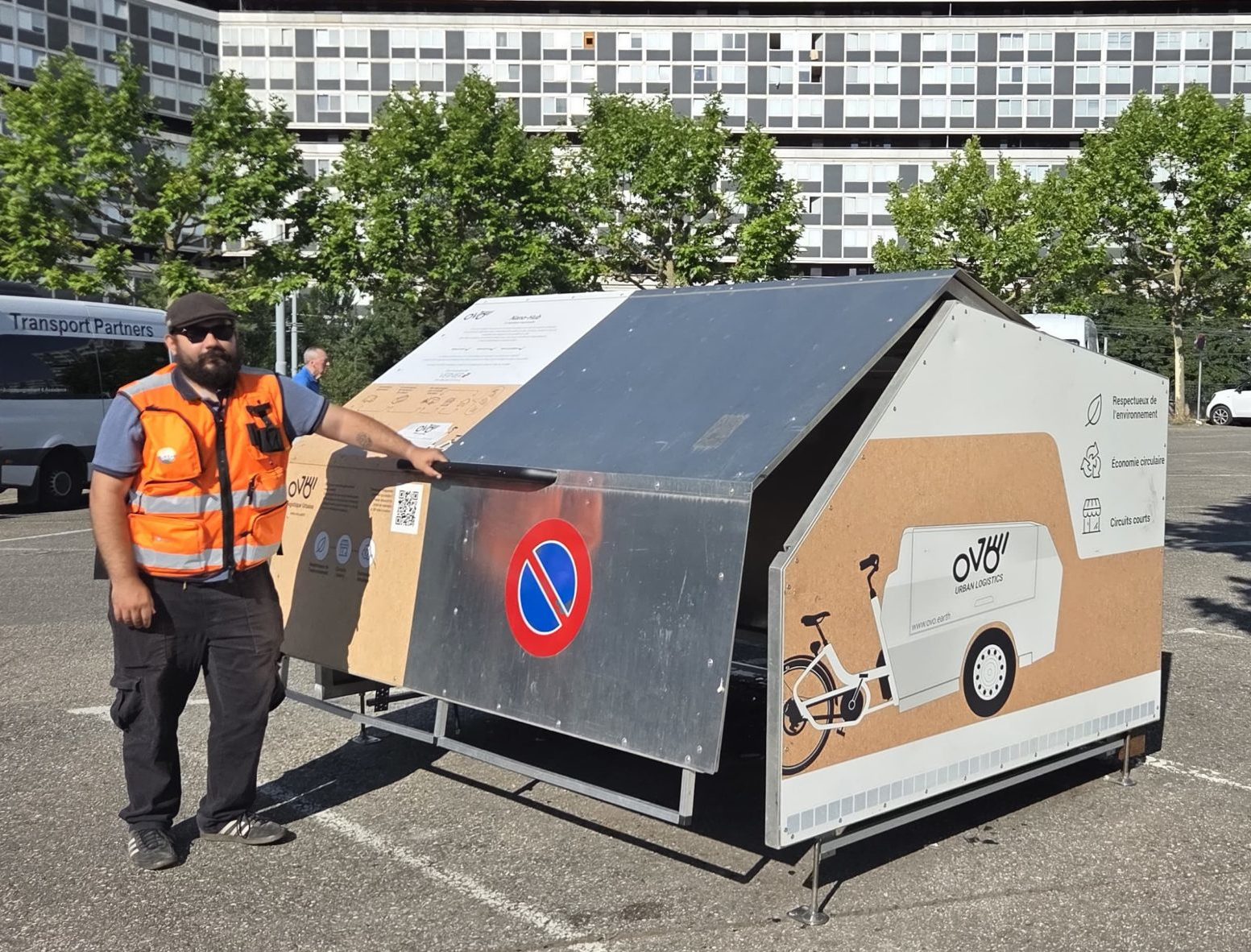
Stock transferred to a NanoHub

    1. The planner reserves a temporary NanoHub and orders the necessary inventory.
    2. OVO supplies the NanoHub from the central warehouse and manages access.
    3. The electricians travel there using sustainable transportation and pick up the necessary equipment.
    4. After completing their work, they drop off the returned items and equipment to be recycled there.
    5. OVO collects returns and restocks the NanoHub as needed.

The Role of OVO

  • Development of a platform dedicated to order management, including order history and user management
  • Managing an inventory of more than 30 SKUs and fulfilling orders
  • Route and Flow Optimization with OVO Planner
  • On-site delivery and pickup, with real-time tracking and notifications

Why is this project innovative?

♻️ Circularity
Delivery and return flows are consolidated to facilitate the collection of old equipment and maximize its reuse.

🚚🚲 Multimodal Logistics
Deliveries are consolidated using electric vans and then made by cargo bike in high-density areas. This means installers no longer need to transport their own equipment or use a large vehicle to get to job sites. They can get around on foot, by bike, or via public transportation.

🏙️ Decentralized Logistics
Temporary NanoHubs can be deployed as close as possible to project sites to bring inventory closer to construction sites and optimize material flows at the neighborhood level.

🌍 Operational and Environmental Impact
By separating installer travel from equipment transport, the project avoids thousands of round trips between warehouses and job sites. Consolidating these flows improves operational efficiency, reduces the number of vehicles used, and lowers the deployment’s environmental footprint.

Our KPIs

⏱️ Over 95% of deliveries made on time, within short time windows
♻️ Over 95% success rate for deliveries and pickups
⚡ Next-day or same-day delivery

Less traffic

Less noise

Less pollution

Partner

We would be happy to answer your questions and tell you about our services.