
Check out the video on the NanoHubZone project in Brussels and Catalonia.
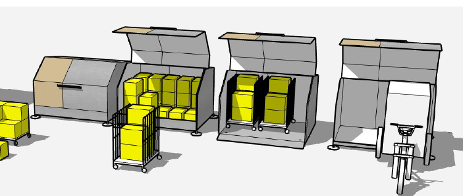
The development of NanoHubZones enables operators to share transshipment spaces.
These transshipment areas are flexible and designed for use by multiple operators.
This innovation was conceived, designed, and implemented by OVO.
This project is supported by EIT Urban Mobility, an initiative of the European Institute of Innovation and Technology (EIT), a body of the European Union. EIT Urban Mobility works to accelerate positive change in mobility to make urban spaces more livable. For more information: eiturbanmobility.eu
Project Summary
NanoHubZone addresses two closely related challenges: (1) traffic congestion and CO₂ emissions generated by conventional urban delivery models, and (2) the limited capacity of public authorities to design, enable, and support the intermodal solutions essential for efficient multimodal logistics. Current last-mile systems still rely heavily on large delivery vehicles, which are often inefficient in dense areas and contribute disproportionately to local pollution. At the same time, shared networks of micro- or nano-logistics hubs remain underdeveloped today.
To improve the sustainability of urban logistics, NanoHubZone is exploring ways to accelerate the deployment of cargo bikes through nano-hubs that enable operational transshipment between traditional logistics flows and low-emission last-mile deliveries. The project is developing and testing the “zone” concept: a modular and scalable configuration of NanoHubs, designed for multi-stakeholder use and supported by a secure booking platform.
Key Results: NanoHubZone deployed and commissioned a total of 16 NanoHubs: 8 in Brussels (2 shared areas, each with 4 NanoHubs, at Rodebeek P+R and Avenue Ariane) and 8 in the Barcelona metropolitan area (multi-city network: Sant Cugat del Vallès, Sabadell, Granollers, Mollet del Vallès, and Mataró). These demonstrations helped engage operators and local governments, test concrete use cases (including multimodal transfers), and produce analyses useful for replication (stakeholder analysis, cost-benefit tools).
Outlook
NanoHubZone paves the way for a new generation of urban logistics that is quieter, cleaner, and better integrated into the city. By demonstrating that a network of modular nano-hubs can be shared among multiple stakeholders via a secure booking platform, the project lays the groundwork for a “public service” infrastructure for the last mile, just like mobility networks. The next steps aim to expand and increase the density of these networks, connect more neighborhoods and cities, and accelerate adoption by operators by making the system simple, reliable, and scalable.
For local governments, NanoHubZone provides a practical tool for addressing urban logistics and supporting the transition: by identifying strategic locations, establishing clear sharing rules, and ensuring a reliable framework in public spaces, cities can facilitate the shift toward low-emission deliveries without waiting for each business model to be fully established. Ultimately, NanoHubZone aims to contribute to less congested urban centers, more efficient deliveries in restricted-access areas, and a sustainable transition in which cargo bikes and multimodal transportation become operational standards.
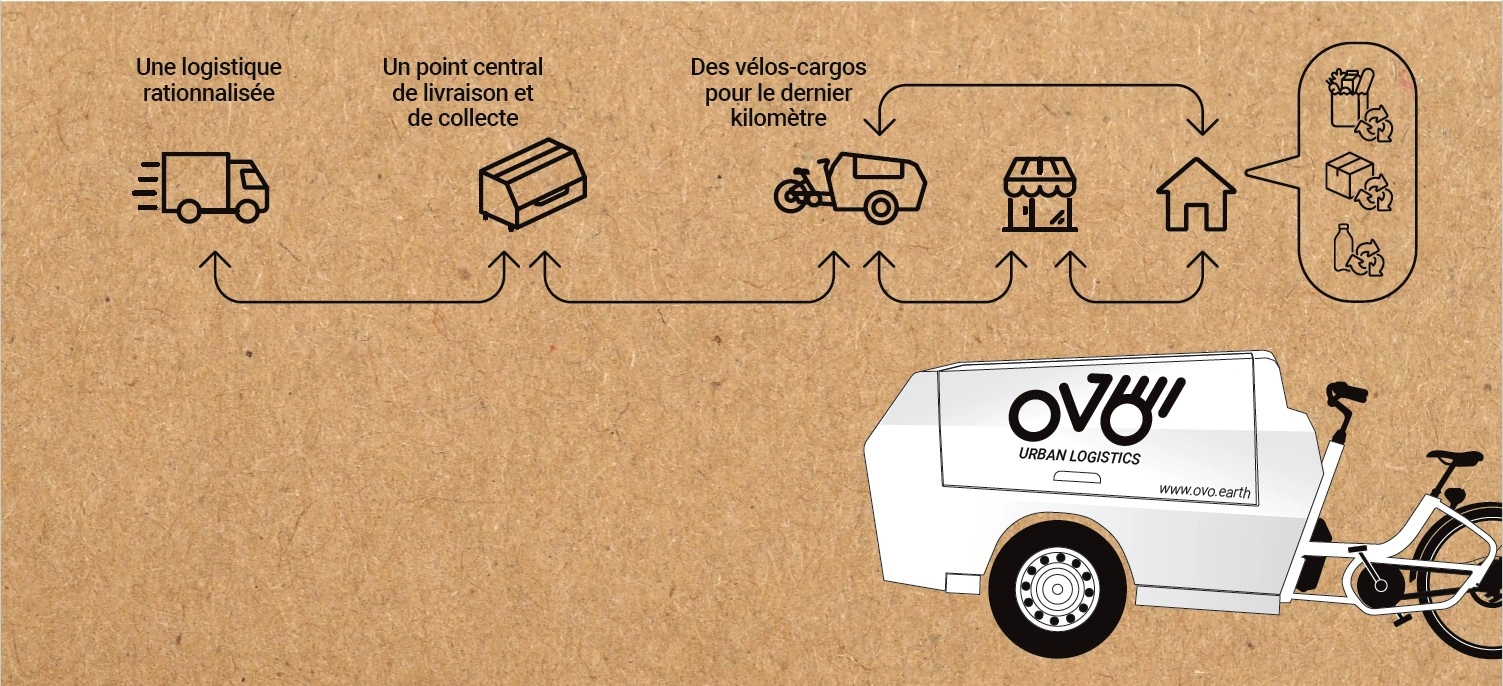
How does it work?
Less traffic
Less noise
Less pollution
We would be happy to answer your questions and tell you about our services.
